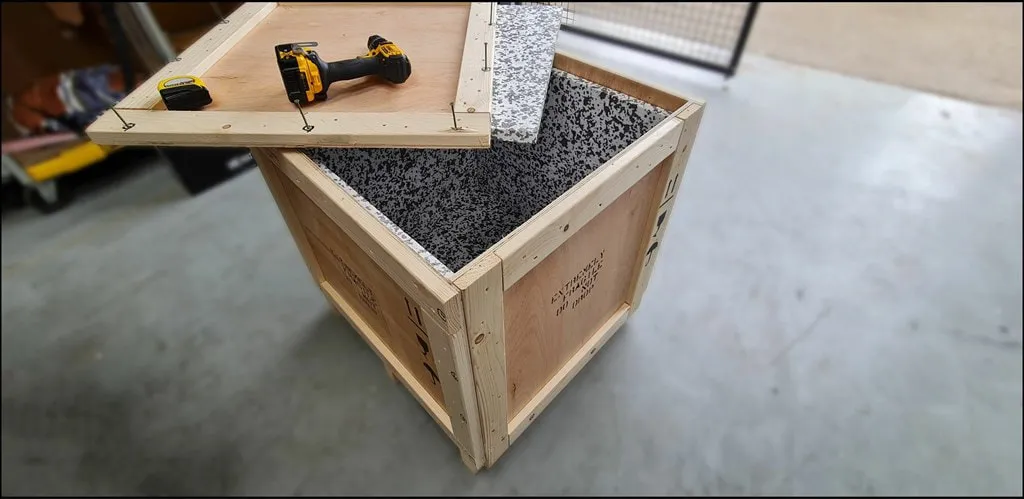
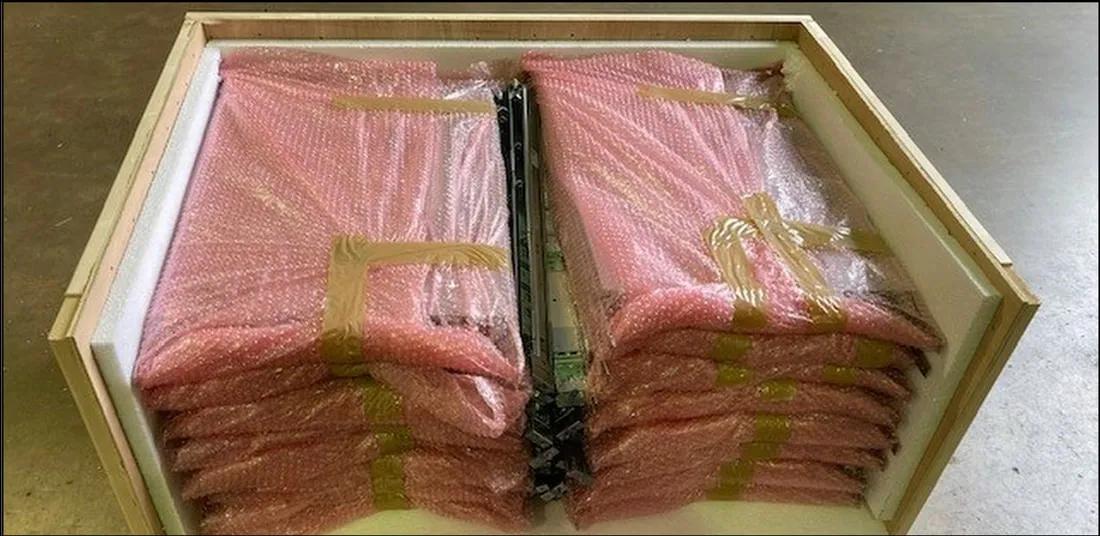
Wood packaging crossing a border has to be treated and marked, and a crate that turns up without the right marking is a crate that sits at the destination while somebody argues about it. Ours are professionally made from certified and treated timber, screwed rather than nailed, so the lid and one side come off cleanly at the far end and go back on again if the item is coming home. Size is not a constraint. The specification is any size crate, and where a wooden case is the wrong answer we will say so and put the item in one of our flight cases instead. The point is the item arriving intact, not the crate winning a prize.
You cannot follow a crate through a transit shed, so we fit indicators that follow it for you. ShockWatch and ShockDot labels verify shipment integrity by changing state if the case takes an impact beyond a set threshold, and TiltWatch labels add a visual record of whether it has been stood on end at some point between our warehouse and yours. It sounds small. It changes the conversation entirely when a claim comes up, because instead of two parties guessing, there is a label on the outside of the case that says what happened and roughly when. We also seal flight cases with shock dots for the same reason.
Most export packing jobs start somewhere else, so we collect on our own vehicles, bring the goods into Heathrow or Farnborough Airport and pack there rather than in a corridor on site. Both warehouses have build areas and prep tables, three phase power distributed to 16 and 32 amp at 240 volts, a warehouse management system, monitored CCTV and an NSI Gold alarm receiving centre with police response. Between them there is around 9,000 sq ft, 850 pallet spaces in racking and another 150 out of gauge on the floor. Nothing sits outside. Assets can be audited, photographed and serial captured before anything is crated. Then it goes out on our own vehicles, or by DHL, or to the forwarder's shed.














.png)