

The challenge
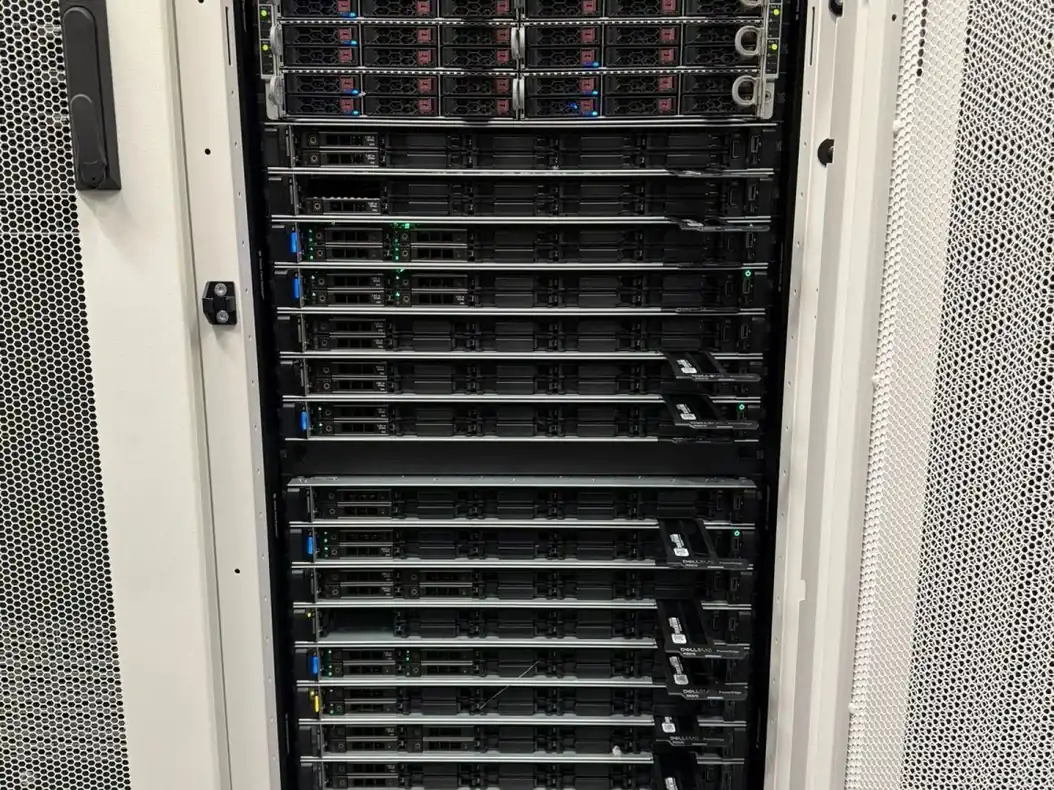
Servers do not cross borders the way parcels do. Each one has a serial number, and each country wants to know it is coming and going. Move 200 of them from Amsterdam to Stockholm, Warsaw, Frankfurt, Paris, Marseille and London, and the paperwork is as big a job as the lifting.
The booking also arrived with 50 ticket numbers to work through. Every data centre has its own rules for access, escorts and timing. Nine sites means nine sets.
France added a wrinkle. The new ELO customs envelope, the Enveloppe Logistique Obligatoire, had to be dealt with for the French legs.
Our approach
This was not our first European server migration. In November 2025 two teams ran simultaneous server migrations in Europe for a US client: Frankfurt to Frankfurt, and Amsterdam to Amsterdam, which took two days. Our own tools and handling kit moved under an ATA carnet.
In December 2025 a two-man team went to Frankfurt, out on a Monday and back on the Tuesday. They did a full de-rack, packed the kit, moved it and re-racked it, again with our equipment on an ATA carnet.
For the big job in June 2026 we used the same approach at scale. Two European partners, one in Frankfurt and one in Amsterdam, assisted our own teams.
Our teams covered Warsaw, Stockholm, Marseille, Paris and London. Ten engineers in total.
Our own equipment ran under one ATA carnet. We used one EOR service for the exporter-of-record side, and one very good customs agent. Five flights and road transport to nine locations got the teams and kit where they needed to be.
The result
The job was completed in five days. In the team's words: 6 countries, 9 data centres, 50 ticket numbers, 200+ servers, 10 engineers, 1 ATA carnet, 5 flights, 1 EOR, 1 very good customs agent.
There were a few minor glitches along the way, mainly with access. That is normal at nine sites. Nothing stopped the programme.