
By Andy Pedley, Director. Updated 5 September 2026.
Servers are kept secure in transit by layering protection, from a label on each server to the locks on the vehicle. In October 2018 we moved three racks of servers from a data centre in Luxembourg to one in Dusseldorf for a new client, and every layer we used on that job is below.
The Luxembourg to Dusseldorf move
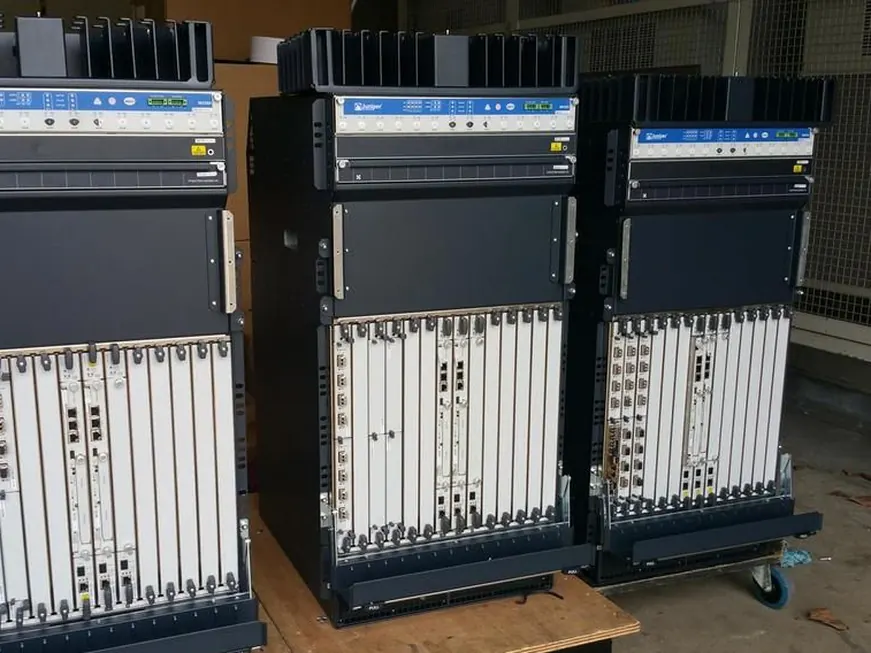
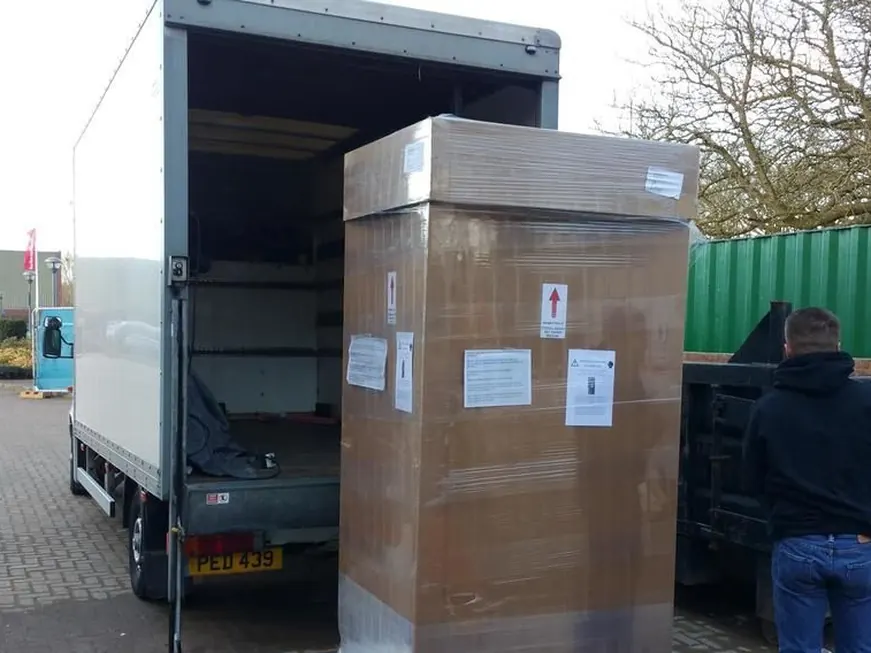
In early October 2018 a high profile company, new to us, needed a three rack server move from a data centre in Luxembourg to a data centre in Dusseldorf. On the Monday our handling and security procedures were put to the test.
It was a short trip by our standards, and the crew was in Europe for a couple of days. Both ends were in the EU, so there was no customs border on the way. The work was in the handling and the security, from the moment the first server came out of its rack.
It was a busy month for that kind of job. Later in October 2018 we delivered disk arrays to Brussels for a US client at 9am, security sealed in custom flight cases.
How we kept the servers secure in transit
This is the order it happened in. The labels go on first, because once a server is in a case the label is the only thing that says where it belongs.
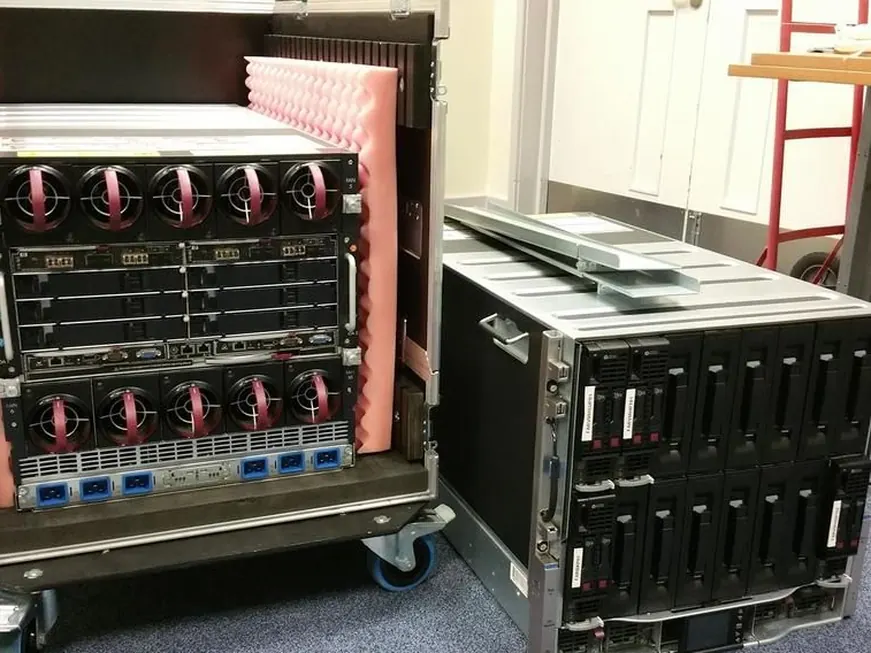
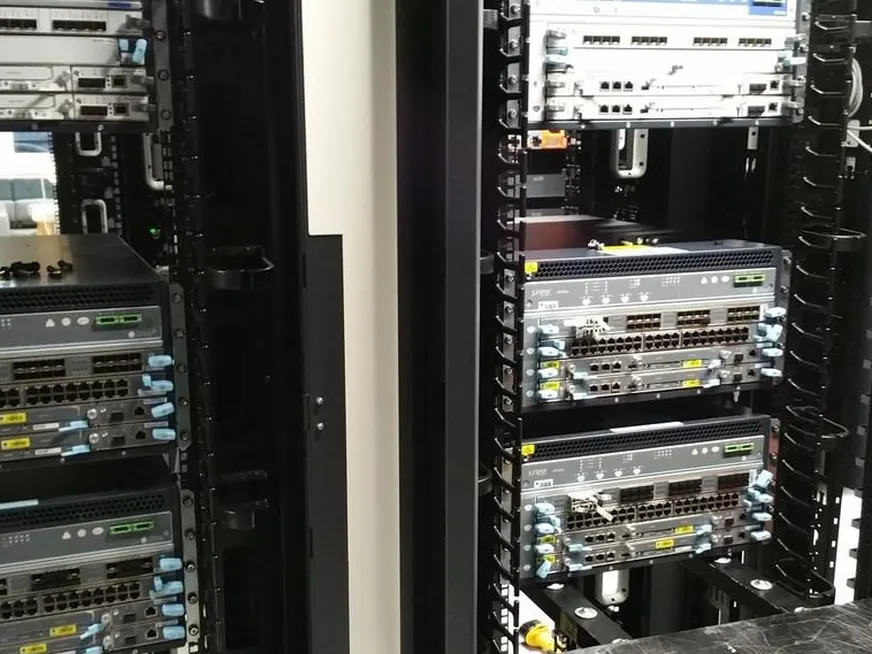
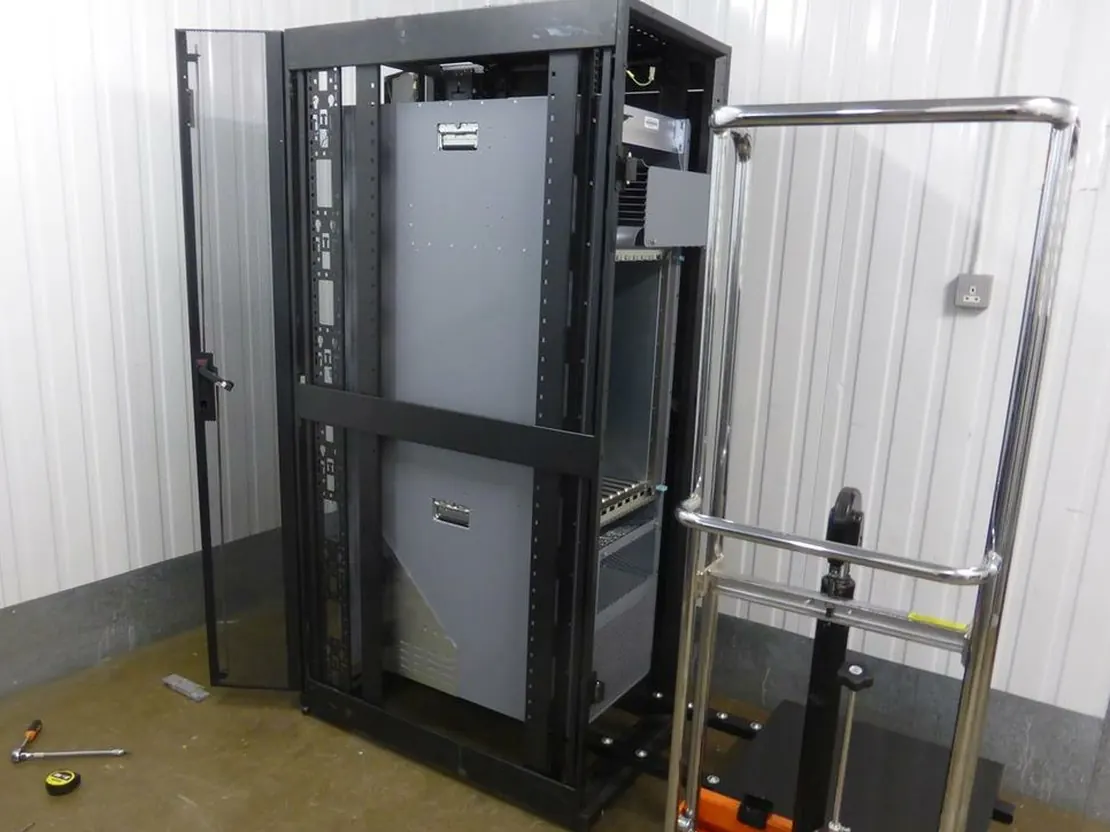
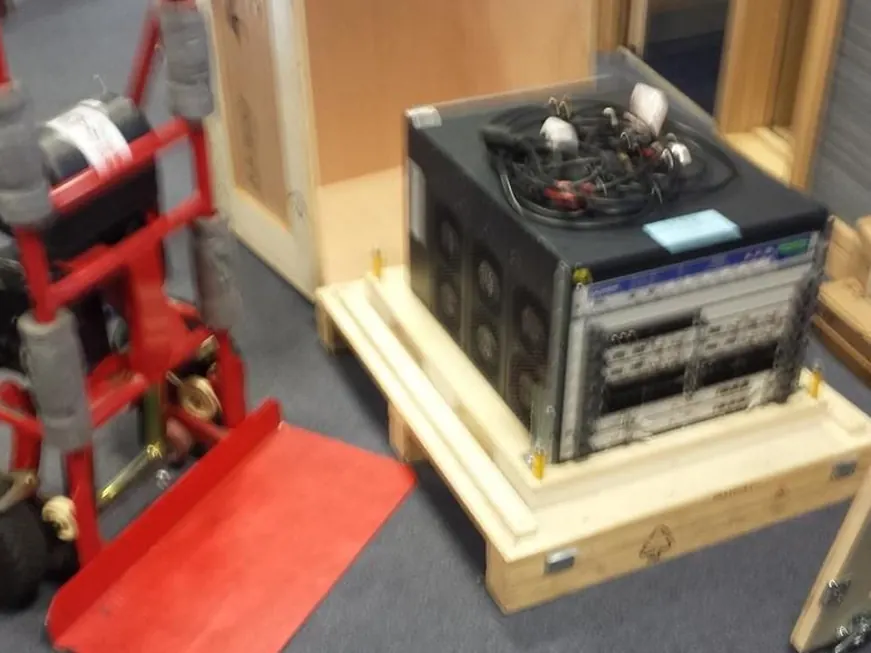
- Every piece of equipment was de-racked and labelled against the rack elevation plan and build list.
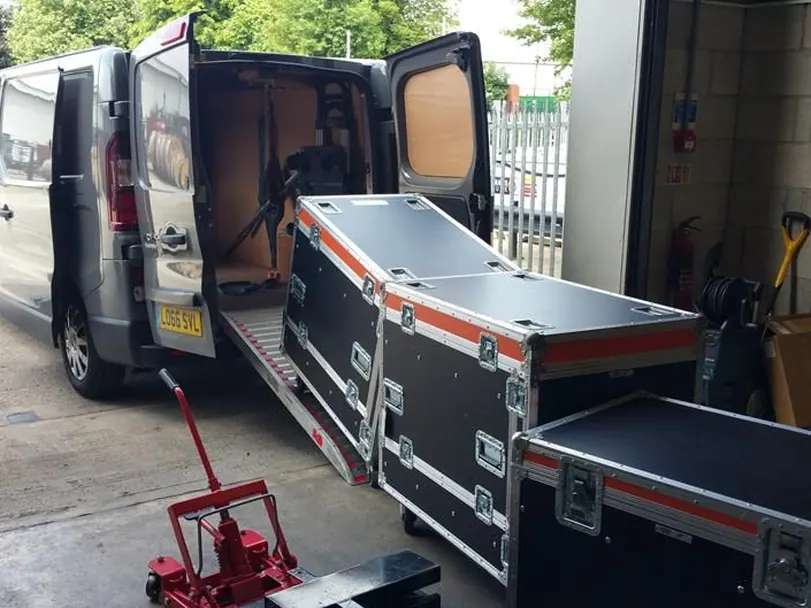
- The servers were packed in our anti-static lined flight cases.
- Each case had Shock Watch labels fitted to monitor handling. A label that has tripped shows a hard knock at the other end.
- The load was security sealed from point to point, so an intact seal at Dusseldorf showed nothing had been opened.
- Each flight case carried its own portable GPS device and was tracked on its own.
- The vehicle was double manned.
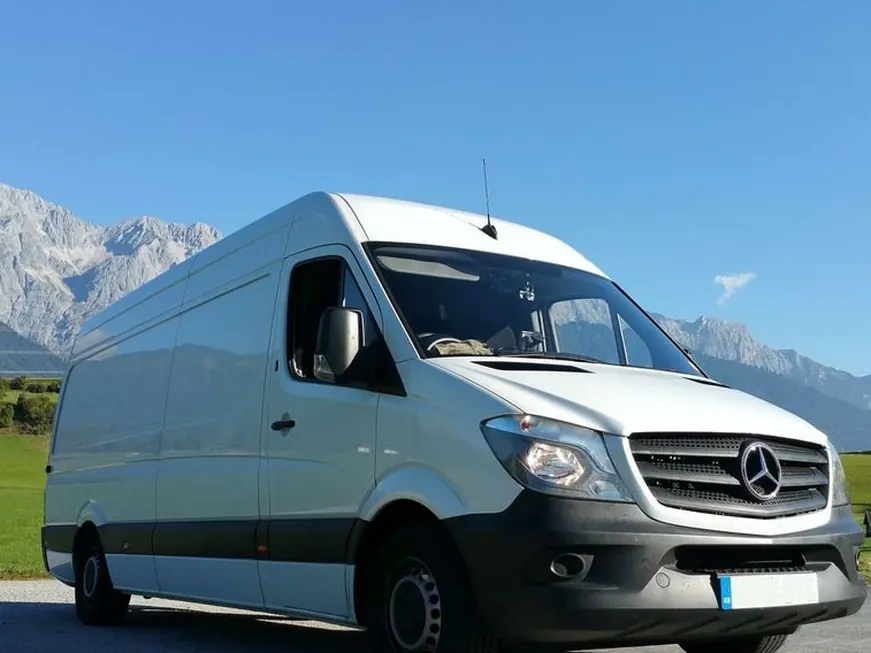
- The van had Thatcham approved deadlocks on all doors, no signwriting, and remote engine immobilisation that could be triggered from anywhere in the world.
- At Dusseldorf the labels gave each server a known place to go back to.
The cases and the vehicles
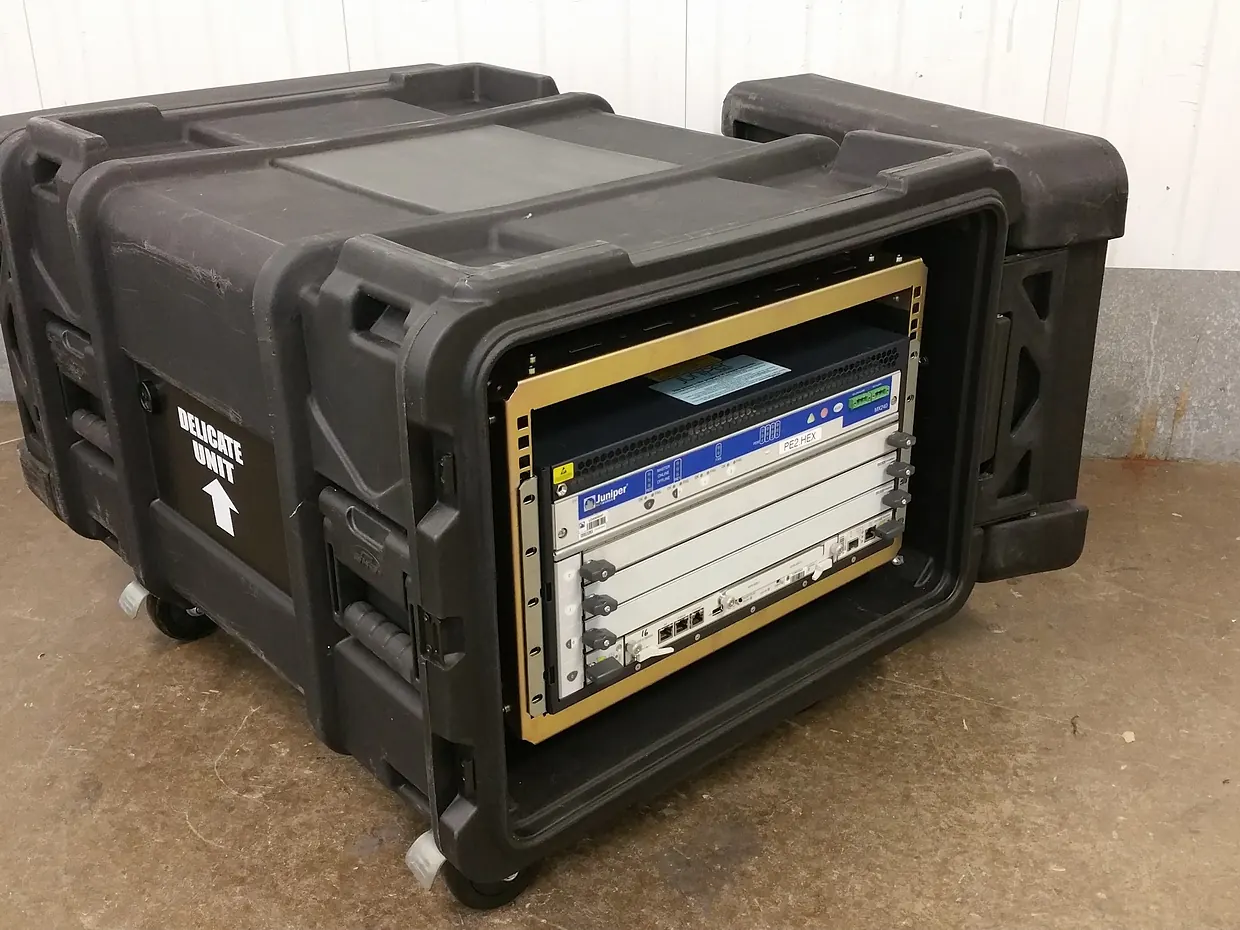
The flight cases we use for servers have comb dividers and lift-out trays. Each is 120 x 60 x 90 cm and 65 kg, and takes 13U with the tray in or 15U without. Since October 2020 every flight case we send out carries Shock Watch labels and tilt devices with unique serial numbers, so a knock or a tip can be traced to a case. For a few servers, our military spec roto shockmount cases are shock and water resistant, with gasketed doors and key-lockable latches.
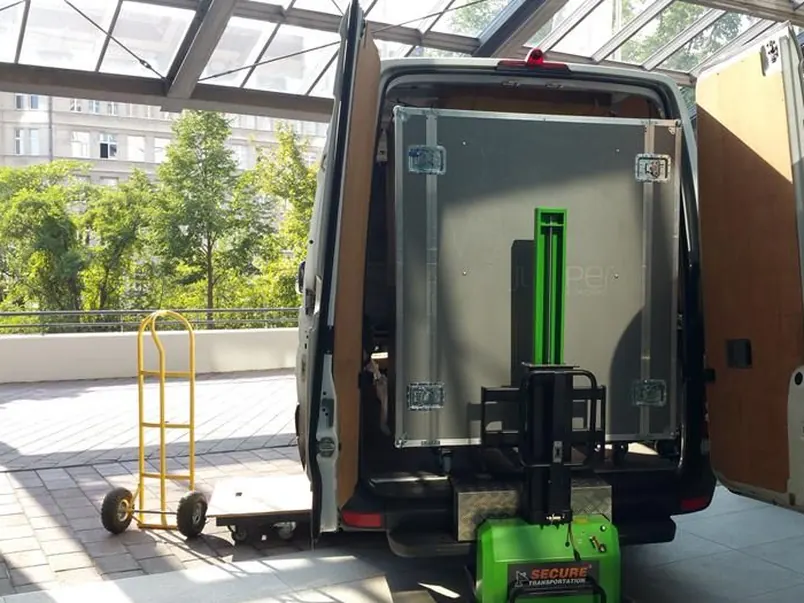
Our vehicles are plain and unsignwritten, and our drivers wear a discreet uniform. To the outside world we look just like everyone else. Low key but highly spec'd. Since August 2026 our whole van fleet has had live streaming cameras and trackers, and the details are on our fleet page.
Not all of this is standard on every move. Seals, a tracker in every case and two crew are set up per job, to what your security team asks for.
What slows it down
Borders. This move stayed inside the EU, but since the UK left on 31 January 2020, anything going between the UK and Europe needs customs paperwork, which we handle with our customs agent. The order matters. A port pass needs a GMR, the GMR comes from the customs entries, and the entries need a commercial invoice. Without a port pass we will simply be turned away.
Loads under a T1 transit document can wait, too. In September 2023 our crew overnighted in Amsterdam while the T1s were cleared, then delivered the next day. In May 2024 a customs hold-up meant we missed the Mont Blanc tunnel before it shut at 7pm, and took a detour. Our customs and cross-border page explains the paperwork.
What to tell us before we come
Send us this and we'll set the move up around it:
- What's moving, with the rack elevation plan or build list.
- The value of the equipment, so cover can be arranged to it.
- What your security team needs: seals, a tracker in each case, two crew, or your own trackers.
- Both addresses, and the access window at each data centre.
- If it crosses a border, whether you have a legal business entity in both countries.
- Who signs for it at each end.
Moving equipment securely around the UK and Europe is our secure transport service. Or call +44(0) 1932 247 365 and tell us what your security team needs.
Questions we get asked about moving servers securely
Does a carrier need an operator licence to move servers into the EU?
Yes. Since 21 May 2022, anyone carrying goods for hire or reward in the EU, Iceland, Liechtenstein, Norway or Switzerland in vans, or cars and trailers, over 2.5 tonnes needs a standard international goods vehicle operator licence. Check whoever you use has one.
Can we use our own GPS trackers?
Yes. In March 2021 a client's equipment went from their London office to a Berkshire data centre security sealed and tracked on their own GPS devices.
What makes customs easier when servers go into the EU?
Having a legal business entity in both countries. Your own businesses can then act as Exporter of Record and Importer of Record, which makes the process a lot easier and cheaper. If not, our customs agent may be able to provide that service, depending on the country.
Can your tools and lifts cross the border with you?
Yes. We have our own ATA carnet covering over 300 pieces of our technical equipment, from tools and server lifts to laptops and even our hard drive shredder.